The Renter's Guide to Hard Water
Renters get the worst of the hard water deal. You can't install a softener, your landlord isn't going to, and the fix everyone recommends first is therefore off the table. The good news: everything that actually helps in a rental screws on by hand, comes off by hand, and moves with you to the next place. No tools, no permission, no lost deposit.
Step 1: Find Out What You're Dealing With
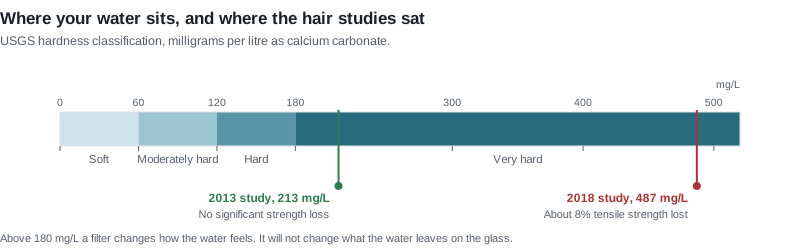
Before spending anything, know your water. Two free-ish routes: your city's annual water quality report (search your utility's name plus "consumer confidence report") lists hardness and chlorine levels, or a $10 pack of hardness test strips gives you a number in 30 seconds. Under 120 ppm, your water is only moderately hard and chlorine is probably your bigger enemy. Over 180 ppm, you're in very hard territory and should set expectations accordingly: a filter will help how the water feels, not what it leaves on the glass. The USGS says about 85% of US homes have some degree of hard water, so odds are you'll find a number worth knowing.
Step 2: The Shower Filter, Your One Piece of Hardware
Every filter we recommend installs the same way: unscrew the old showerhead or slip the inline unit onto the shower arm, hand-tighten, done. It's the same effort as hanging a towel. Full reasoning on what filters do and don't do is in do shower filters actually work, but the renter's summary: it removes chlorine and sediment, which is the half of the problem you can fix without plumbing.
- Cheapest way in: AquaBliss SF100, ~$35. Keeps your existing showerhead, swaps in seconds.
- Best filtration for the money: Weddell Duo, $89. NSF certified, cheapest per gallon over time.
- If the bathroom is ugly anyway: Jolie or Canopy. A rental's sad flow-restricted showerhead replaced by something premium is a genuine quality-of-life move, just budget the filter subscription.
One renter-specific tip: keep the original showerhead in a closet. At move-out, screw it back on and take your filter with you. The deposit inspection sees exactly what it saw at move-in.
Step 3: The Sub-$20 Kit That Does the Rest
- Chelating shampoo, once or twice a month. Strips the mineral film off your hair that no filter can prevent. If you do only one thing on this page, do this. The why is in hard water and hair loss.
- A daily shower squeegee. Thirty seconds after each shower keeps scale from etching the glass, which is also the thing landlords notice at inspection.
- Vinegar, the renter's descaler. A bag of vinegar rubber-banded over the showerhead overnight dissolves scale buildup and restores flow. Works on faucet aerators too. Costs almost nothing.
- Moisturize while damp. Hard water plus chlorine wrecks the skin barrier; locking in moisture right out of the shower is the dermatologist-standard counter.
What Not to Bother With
- "Water softening showerheads." No cartridge softens water. Rental or mansion, the chemistry is the same.
- Countertop "conditioners" and magnet gadgets. Magnetic and electronic descalers have decades of unimpressive evidence behind them. Your $40 is better in cartridges.
- Asking the landlord for a softener. Almost never happens, but one exception: if scale is visibly damaging fixtures, mention it in writing. Scale damage is their problem long-term, and occasionally a building owner does the math on their water heater and surprises you.
If You Later Buy a Place
The calculus flips. A whole-home softener becomes the correct first purchase in hard water country, and the shower filter becomes the chlorine add-on rather than the main event. Keep whichever filter you own, it still earns its spot.
The renter's playbook: test strips to know your number, a hand-tightened filter for the chlorine ($35 to $89 covers it), chelating shampoo for the mineral film, vinegar and a squeegee for the scale you can see. Original showerhead in the closet, filter in the moving box. Total spend under $60 if you go budget, and every dollar of it leaves with you.