Do Shower Filters Actually Work for Hard Water?
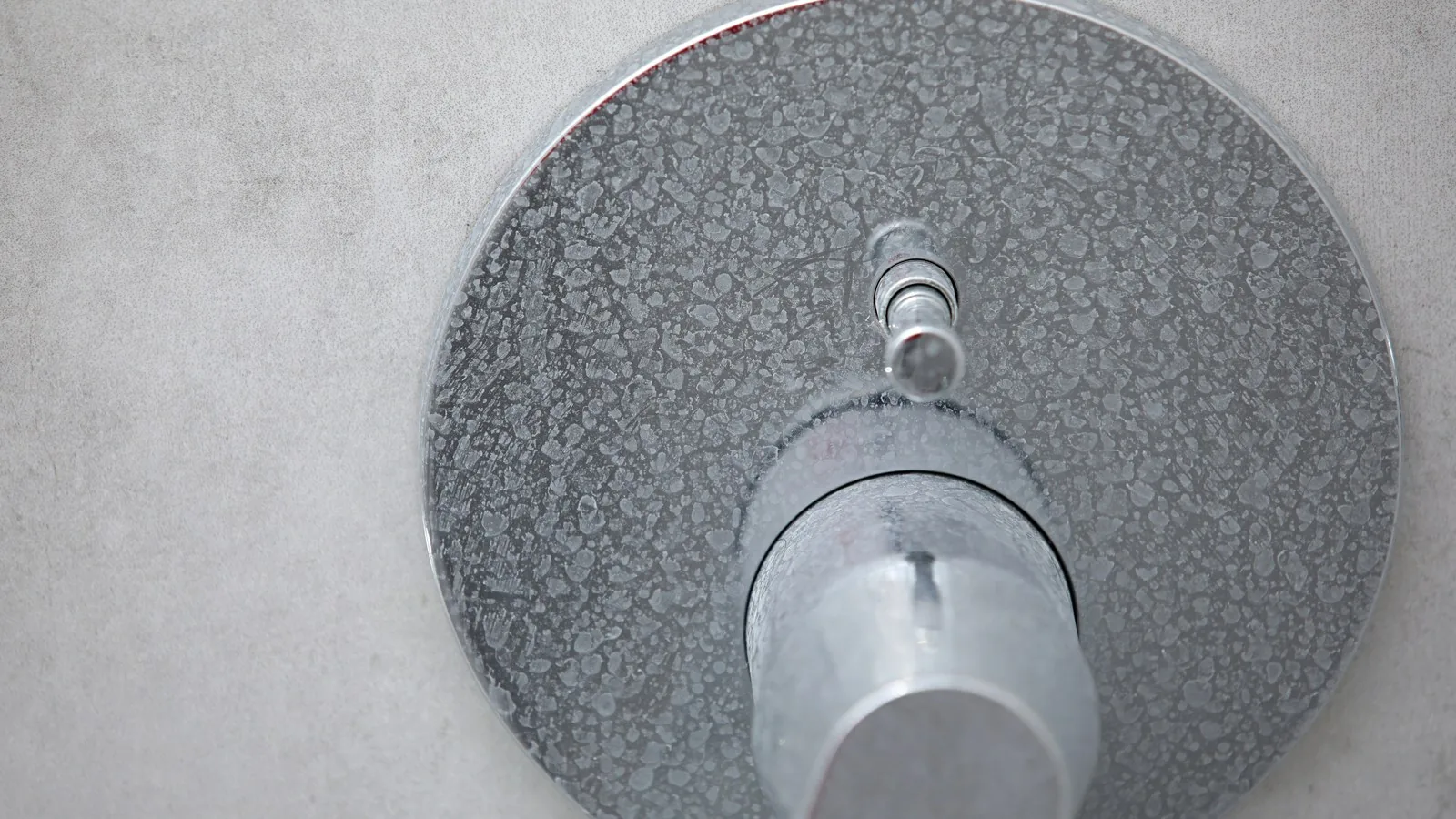
Short answer: shower filters work for chlorine, sediment, and some metals. They do not work for hardness. Anyone telling you a cartridge behind your showerhead "softens" your water is selling you something, and this page exists so you can't be sold.
Why No Shower Filter Can Soften Water
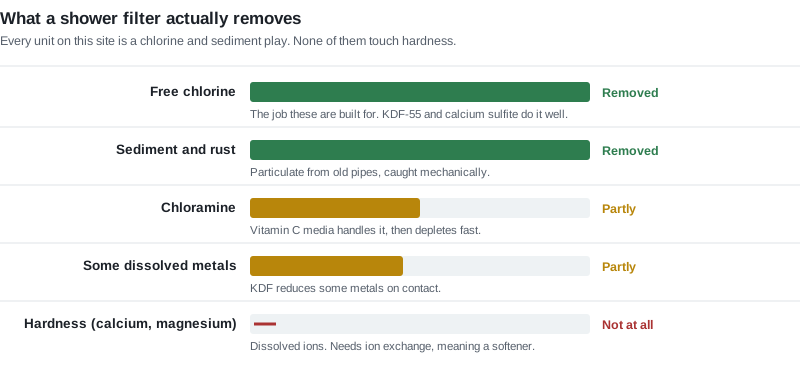
Hard water is water carrying dissolved calcium and magnesium ions. The word dissolved matters. These aren't particles floating in the water that a screen can catch. They're individual charged ions, thousands of times smaller than the pores in carbon or KDF media. At two gallons per minute, they flow straight through every filter media on the market as if it weren't there.
The only proven chemistry that removes dissolved calcium and magnesium is ion exchange: water passes through a bed of resin beads that swap hardness ions for sodium ions, and the resin gets flushed and recharged with salt on a regeneration cycle. That takes a resin tank, bed depth, contact time, and a brine tank. In other words, a water softener. A shower cartridge has none of those things. It's not that shower filter companies haven't cracked it yet. The physics doesn't fit in the package.
Some cartridges advertise "softening beads" or polyphosphate stages. Polyphosphate can hold minerals in suspension a bit so they deposit less scale, which is scale inhibition, not softening. Your hardness number, measured in grains or ppm, is the same coming out as going in.
What Shower Filters Actually Do
Here's the part the cynics get wrong: the stuff filters do remove is real, and it matters for hair and skin.
Chlorine removal, the main event
Your utility keeps chlorine or chloramine in the water all the way to your showerhead, on purpose, to keep it safe. But chlorine is an oxidizer. It strips the sebum that protects your skin and scalp, dries hair, and irritates sensitive skin, and in a hot shower you're standing in an aerosolized cloud of it. KDF-55 media (a copper-zinc alloy) and calcium sulfite both neutralize free chlorine well at shower temperatures and flow rates. This is the job shower filters are genuinely good at, and it's why NSF/ANSI 177, the only certification standard for shower filters, covers exactly one thing: free chlorine reduction.
Sediment, rust, and some metals
Filters catch particulate rust and grit from old pipes, and KDF media reduces some dissolved metals on contact. Independent lab testing of the better units, like the Weddell Duo, shows meaningful reduction of chlorine byproducts too.
The soap scum improvement, indirect but real
Hard water plus soap makes soap scum, the chalky film that dulls hair and sits on skin. Research has measured that surfactant residue deposits on skin at roughly 2.8 times the rate in hard water compared to soft water, and dermatology literature links that residue to worsening of eczema and dermatitis. A filter can't change your hardness, but removing chlorine means your shampoo and soap work in less hostile water, and many people find they need less product. Softer-feeling water without softer water, so to speak.
So Why Does Everyone Say Their Hair Got Better?
Three reasons, all plausible. First, chlorine removal is real and your hair and scalp notice it. Second, new-filter enthusiasm makes people also change shampoo, wash less often, or pay attention for the first time. Third, placebo is powerful and beauty marketing feeds on it. The honest read of owner reviews across brands: dry-skin and itchy-scalp complaints improve most reliably, shine and manageability improvements are common, and "my hair stopped falling out" claims are where you should get skeptical. We cover that specific claim, with the actual studies, in hard water and hair loss.
The Decision Tree
- Symptoms are dry skin, itchy scalp, dull hair, and you rent or want cheap: get a shower filter. Start with our 2026 picks. It treats the chlorine half of the problem for $35 to $170.
- Symptoms are scale on glass, crusty faucets, spotted dishes, dingy laundry: that's hardness, and only a whole-home softener fixes it. A filter will not help the glass, ever.
- You own your home and have very hard water (180+ ppm): price out a softener first. It protects the water heater and every fixture, and it's the only fix that changes the hardness number. Add a shower filter for chlorine if you like; softeners don't remove chlorine either. The two solve different problems.
- You rent: the softener is off the table, so the filter plus a few habits is your play. Full playbook in the renters guide.
Red Flags When Shopping
- "Softens hard water" on a cartridge product. Now you know why that's false. Treat it as a signal about everything else the brand claims.
- Stage inflation. "15-stage" and "20-stage" filters are counting layers of media, mesh screens, and beads as stages. Two or three media do the work.
- No NSF/ANSI 177 certification plus big removal percentages. Only a few manufacturers hold NSF 177. Uncertified isn't automatically bad, but uncertified plus "removes 99% of everything" means the only evidence is the brand's word.
- Vitamin C as the headline media. Vitamin C does neutralize chloramine well, but it dissolves fast and those cartridges deplete quickly. Fine as a stage, weak as the whole story.
Bottom line: shower filters are a legitimate $35 to $170 fix for the chlorine part of bad shower water, and chlorine is a bigger deal for hair and skin than most people think. They are a zero-percent fix for hardness itself. Buy one for what it does, not for what the ad copy says it does.